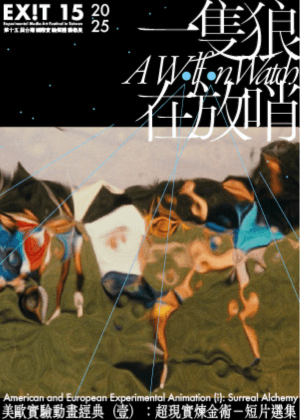
美歐實驗動畫經典(壹):超現實煉金術-短片選集
American and European Experimental Animation (i): Surreal Alchemy
節目介紹
國影電影編號:M2025_12_14
放映規格:DCP﹑16mm
級別:保護級
片長:82分鐘
發音:無對白
字幕:中字﹑無字
☆ 映前導聆 Pre-screening intro
美歐實驗動畫經典(壹):超現實煉金術-短片選集
American and European Experimental Animation (i): Surreal Alchemy
1. 煉金術的邊緣 Edge of Alchemy
史黛西・史蒂爾斯 Stacey Steers
USA | 2017 | 35mm to 4K digital| Color | Sound | 19min
瑪麗畢克馥和珍妮蓋納的劇情無縫銜接了早期無聲電影的風格,她們被置於一部超現實的史詩之中,顛覆了弗蘭肯斯坦的故事,並暗流湧動著當代蜂巢崩塌的暗流。在這部手工製作的電影中,史黛西・史蒂爾斯從早期的電影資料中選擇了片段,印製了這些畫面,並重新詮釋了動作,使得從適當的圖像中組裝起來的「故事」得以演變。她將演員置於新想像的拼貼環境中,這些環境是用 19 世紀的雕刻和插圖碎片手工構建的。 《煉金邊緣》是探討女性內心世界的三部曲中的第三部。音樂由波蘭作曲家萊赫揚科夫斯基(Lech Jankowski)創作。
「《煉金術邊緣》是史黛西・斯蒂爾斯對拼貼重新審視動畫的獨特視角的縮影,這是一種延續超現實主義電影偉大傳統的不可思議的方式。馬克斯・恩斯特會引用洛特雷阿蒙的縫紉機和雨傘來定義超現實主義繪畫的結構,即『將兩個從表面上看毫無關聯的東西連接起來,在一個表面上看並不適合它們的環境。』我想補充的是,讓這一切感覺如此無縫、必然、莫名其妙地正確……『形式感』,正如蘇珊娜・K・蘭格所說的那樣……」—— 菲爾・所羅門
Mary Pickford and Janet Gaynor, seamlessly lifted from early silent films, are cast into a surreal epic with an upending of the Frankenstein story and a contemporary undercurrent of hive collapse. In this handmade film, Stacey Steers selects sequences from early cinematic sources, prints the frames, and re-contextualizes the action, allowing the "story" assembled from appropriated images to evolve. She inserts her actors into newly imagined collage environments, built by hand from fragments of 19th century engravings and illustrations. Edge of Alchemy is the third film in a trilogy examining women's inner worlds. Music by the Polish composer Lech Jankowski.
2. 蘆筍 Asparagus
蘇珊・皮特 Suzan Pitt
USA | 1979 | 35mm to digital| Color | Sound | 18min
我有一個花園,在那裡我種植了蘆筍——這是一種非常原始的蔬菜,可以追溯到恐龍時代。它從地裡長出來,像一根陰莖狀的莖,尖尖的,紫綠色,是美麗男性形態的精髓。但隨著夏天過去,它會長得更高,變成一株嬌嫩的蕨類植物,在路邊隨風搖曳,就像微風中飄揚的長髮,散發出女性的本質。 我認為它是性感的美麗象徵。由此,我創作了一首關於創作過程的視覺詩,以魔術師/藝術家的角色作為主角,引導觀眾探索主宰和驅動我們生存的創造力的本質。
I had a garden where I grew Asparagus from seed - it's a very primitive vegetable going back to the time of the dinosaurs. It comes out of the ground as a phallic stalk, pointy and purple green, the essence of a beautiful masculine form. But then as summer passes it stretches tall and becomes a delicate fern, seen on roadsides tilting in the wind, the essence of the feminine like long strands of tangled hair in the breeze. I thought of it as a beautiful symbol of sexuality. From that I made a visual poem about the creative process, taking the role of the magician/artist as the protagonist who ushers the viewers through her search for the essence of the creative forces which rule and drive our existence.
The film is a circle more than a straight-ahead experience - you could enter at any point and the meaning would be the same. The taking in and spewing out, the searching and the discovering, the desire and the contact, the ever-evolving acts of nature. There is something of the 60's and the 70's there in the film- acid and hallucinogens and spectacular insight and the trance of getting lost and being found- and color. All my films have been made by hand and shot under a 35mm camera - the slight jiggles and the layering of the cels and the hand-drawn animation, and the staccato vibrations of the shading and the variances of light and the medium of film itself are all a part of the way the movies look and feel. To me as different as looking at a painting and looking at a reproduction of a painting - the film quality itself is a part of the message.
3. 自來水 Tap Water
莉莉・卡雷 Lilli Carré
USA | 2017 | Video| Color | Sound | 4min 32sec
所有東西都會漏一點。一首觸覺詩。
Everything leaks at least a little.
4. 生活是一種觀點,火災是一種事實 Life is an Opinion, Fire a Fact
卡倫・亞辛斯基 Karen Yasinsky
USA | 2012 | Video| Color | Sound | 10min
關鍵在於從絕望的行為走向某種平靜的暗示。當我們看到可怕的事件,特別是只在電視或電影中看到的自殺的恐怖時會發生什麼?行為只顯示結果,而不顯示導致結果的想法和感受。第一張圖片顯示的是一名剛跳樓自殺的女子(出自羅伯特・布列松的《溫柔的女人》)。塔可夫斯基的《鄉愁》中自焚的動畫場景是反向拍攝的,從而否定了敘事張力的累積。這個角色將自己置於馬可・奧勒留的雕像之上,「生活是一種觀點」這句話就出自馬可・奧勒留之口。我們最終到達一個地方,透過聲音或影像,可以了解到寧靜的不同定義(一種觀點)。
Radically deconstructive in its interpretation of a famous Tarkovsky-sequence, Yaskinksy reverses the original order of the sequence and blends it with white noise and hand-drawn sequences. She also ties her act of appropriation in with a suicide scene from Bresson and other, more serene images and sounds.
5. 陰謀詭計 Skullduggery
史丹・范德比克 Stan VanDerBeek
USA | 1960 | 16mm| B&W | Sound | 5min
雙重曝光和其他方法被用來加入動畫拼貼「現場」新聞片段,將現場場景和非現場場景混合在一起,以諷刺世界上所謂的領導人。 數位文件版本由新美國電影集團-電影製作人合作社和斯坦范德比克檔案館於 2019 年透過國家電影保護基金會的前衛大師資助計劃和電影基金會保存。資金由喬治盧卡斯家庭基金會提供。
Double exposure and other methods are used to include animated collage "live" newsreel footage, mixing the eye with live scenes and unlive scenes, to jibe at world so-called leaders. Digital file version preserved in 2019 by New American Cinema Group-Filmmakers' Coop and Stan VanDerBeek Archive through the National Film Preservation Foundation's Avant-Garde Masters Grant Program and The Film Foundation. Funding provided by The George Lucas Family Foundation.
6. 太陽石 Sunstone
艾德・艾姆什威勒 Ed Emshwiller
USA | 1979 | Videotape to 16mm| Color | Sound | 3min
紐約理工學院使用數位繪畫程式製作的電腦動畫電影版本。最初以錄影帶發行。
A film version of computer animation done using a digital paint program at New York Institute of Technology. Originally released as a videotape.
7. 湖邊 By the Lake (Au Bord du Lac)
派崔克・博卡諾夫斯基 Patrick Bokanowski
France | 1994 | 16mm| Color | Sound | 6min
「確實,拍攝中身份不明的人並不僅僅是為了表演,但完成這個場景所花費的時間也超出了任何正常的定義。顏色各不相同,我們彷彿回到了許多年前,毫無疑問,因為這個鏡頭突然讓我們想起了梵高或高更以及他們使用的色調。我們並不在任何可識別的湖泊邊,而是被光線、運動和這個地方在派崔克・博卡諾夫斯基之前的色彩背景,就像他所在海岸的電影中所喚起的色彩《海灘》中發生的那樣,彷彿水的接近改變了周圍的一切,在我們欣喜的眼前將所有物質都變成了無盡的螺旋。」
—— Jacques Kermabon,摘自 BREF 雜誌,1994 年 3 月
"It is true that the unidentified people being filmed are not there simply for the actions they are performing, but the time that the scene is taking to be completed is also beyond any normal definition. The colors vary, and we are plunged many years back in time, no doubt because the shot is suddenly reminding us of Van Gogh or Gauguin and the color-tones they used. We are not at the side of any identifiable lake, we are swept up in a different sort of space-time context by the light, the movement and the colors that the place evoked in Patrick Bokanowski's mind.
The shore we are on is the quintessence of lakehood, and, as happens in his previous film, THE BEACH, it's as if the proximity of water metamorphosed everything around, fluidizing all of the matter into endless spirals before our delighted eyes."
— Jacques Kermabon from BREF magazine, March 1994
8. 鹽花園 Salt Garden(Jardin du Sel)
蘿絲・羅德 Rose Lowder
France | 2011 | 16mm| Color | Sound | 16min
海鹽花的製作過程是使海水濃縮並飽和,形成鹽晶體。 「鹽花園」一詞體現了這項活動的田園特色。
六幅詩意的畫作,其中五幅以陽光、風和大海為主題,最後一幅則描繪了一座休耕的小公園。
音樂:弗朗索瓦・亞歷克西斯
The production of sea salt flower is a process of concentration and saturation of sea water in order to form salt crystals. The agriculture character of the activity is evoked by the term "salt garden".
Six poetic pictures, five based on the sun, the wind and the sea, while the last lingers on a small park left fallow.
Music : François Alexis
關於導演 About the Filmmakers:
史黛西・史蒂爾斯 Stacey Steers
史黛西・史蒂爾斯以其以流程為導向、勞力密集的電影而聞名於國際,這些電影由數千幅紙上手工作品組成。她的作品採用了早期電影資料中的圖像,並從中建構了原創的、抒情的敘事。史泰西的動畫短片已在美國國內外放映,並獲得無數獎項。她的作品曾在聖丹斯電影節、特柳賴德電影節、洛迦諾國際電影節、鹿特丹國際電影節、紐約新導演新電影、現代藝術博物館、紐約林肯中心和華盛頓特區國家美術館展出。她曾在巴塞隆納當代文化中心、紐約羅徹斯特的喬治伊士曼博物館、丹佛當代藝術博物館、科羅拉多州博爾德的 BMoCA 和蒙特婁的魁北克電影資料館舉辦個人展覽。史泰西曾獲得古根漢基金會、創意資本和美國電影協會的大量資助。她是美國電影藝術與科學學院院士。她在科羅拉多州博爾德生活和工作。
STACEY STEERS is known internationally for her process-driven, labor-intensive films comprising thousands of handmade works on paper. Her work employs images appropriated from early cinematic sources, from which she constructs original, lyrical narratives. Stacey's animated short films have been screened throughout the U.S. and abroad and have received numerous awards. Her work has been featured at the Sundance Film Festival, Telluride Film Festival, Locarno International Film Festival, Rotterdam International Film Festival, New Directors New Films, New York, MoMA, The Lincoln Center in New York City, and the National Gallery of Art, Washington, D.C. Since 2011, Stacey has expanded her work to include collaborative installations that join invented, three-dimensional production elements with film loops, creating a new context for experiencing her films. She has had solo exhibitions at the Centre de Cultura Contemporània in Barcelona, The George Eastman Museum in Rochester, New York, the Museum of Contemporary Art Denver, BMoCA in Boulder, Colorado, and the Cinémathèque québécoise in Montreal. Stacey is a recipient of major grants from the Guggenheim Foundation, Creative Capital, and the American Film Institute. She is a member of the Academy of Motion Picture Arts and Sciences. She lives and works in Boulder, Colorado.
蘇珊・皮特 Suzan Pitt
蘇珊・皮特(1943-2019)出生並成長於密蘇裡州堪薩斯市。 1965 年,她從克蘭布魯克藝術學院畢業,獲得繪畫學士學位,此後在歐洲、墨西哥、紐約、洛杉磯和新墨西哥州陶斯生活和工作。
1968年,她開始製作動畫電影,靈感來自於她的畫作「我畫的圖像似乎有過去和未來,透過動畫,我可以想像和戲劇化它們的故事」。她的電影《蘆筍》於 1979 年在惠特尼博物館的裝置藝術中首映,並與大衛林區的《橡皮頭》一起在洛杉磯韋弗利劇院和 NuArt 劇院的午夜場上映了兩年。 2017 年,紐約現代藝術博物館舉辦了蘇珊皮特獲獎動畫電影回顧展。 她的畫作和電影被沃克藝術中心、現代藝術博物館、阿姆斯特丹市立博物館和洛杉磯電影藝術與科學學院永久收藏。她的動畫電影曾在全球數百個著名場館放映,包括聖丹斯電影節、紐約電影節、倫敦電影節、渥太華國際動畫電影節、莫雷利亞國際電影節和東京圖像論壇電影節。
皮特曾任哈佛大學副教授,並獲得古根漢獎學金、洛克斐勒獎學金和美國國家藝術基金會頒發的三項製作資助。
Suzan Pitt (1943-2019) was born and grew up in Kansas City, MO. In 1965 she graduated with a BFA in painting from Cranbrook Academy of Art and since then lived and worked in Europe, Mexico, New York, Los Angeles, and Taos, New Mexico. In 1968 she began making animated films which were inspired by her paintings "My painted images seem to have a past and future and through animation I could imagine and dramatize their stories". Her film "ASPARAGUS" premiered in an installation at the Whitney Museum in 1979 and ran for two years with David Lynch's ERASERHEAD in the midnight shows at the Waverly Theater and the NuArt theater in Los Angeles. A retrospective of Suzan Pitt’s prize-winning animated films was presented in 2017 at the Museum of Modern Art in New York. Her paintings and films are in the permanent collections of the Walker Art Center, The Museum of Modern Art, The Stedeliik Museum Amsterdam and the Academy of Motion Picture Arts and Sciences Los Angeles. Her animated films have been featured at hundreds of prestigious venues around the world, including the Sundance Film Festival, the New York Film Festival, the London Film Festival, the Ottawa International Animated Film Festival, the Morelia International Film Festival, and the Image Forum Film Festival in Tokyo.
A former Associate Professor at Harvard University, Pitt has received a Guggenheim Fellowship, a Rockefeller Fellowship and three production grants from the National Endowment of the Arts.
莉莉・卡雷 Lilli Carré
莉莉・卡雷是一位居住在洛杉磯的跨領域藝術家和電影製作人。她的動畫電影曾在聖丹斯電影節、25FPS、安納西電影節、鹿特丹國際電影節、新千歲動畫節、安阿伯電影節和歐洲媒體藝術節等電影節上放映。她是 Eyeworks 實驗動畫節的共同策展人,該節成立於 2010 年,每年在芝加哥、洛杉磯和紐約舉行。她與 Fantagraphics 等出版社合作出版了幾部圖像小說,並在國際畫廊展出。 她是 2024 年古根漢研究員,目前在加州藝術學院實驗動畫課程任教。
Lilli Carré is an interdisciplinary artist from Los Angeles, working in experimental animation, print, and ceramic sculpture. Recent works focus on perceived misbehaviors, bodily communication, and the grotesque. She is particularly interested in the open-ended possibilities and histories of the animated body – simultaneously physical and virtual, free of expectations or fixed form.
Lilli's films have screened in festivals worldwide, including Sundance, Rotterdam, Annecy, 25FPS, EMAF, New Chitose, Pictoplasma, Guanajuato Film Festival, and Ann Arbor. She is the co-curator of the Eyeworks Experimental Animation Screening Series, held annually in LA, Chicago, and NY since 2010.
She has created over 100 handmade artist books, zines, and comics over the years. Several of her graphic novels have been published by Fantagraphics and she has contributed original work to The New Yorker, The New York Times, the LA Philharmonic, and The Poetry Foundation. Exhibitions of her drawing, animation, and sculpture have included a solo show at the Museum of Contemporary Art Chicago. Her work has been supported by artist residencies at MacDowell, Yaddo, Bemis Center for Contemporary Arts, and a 2024 Guggenheim Fellowship.
Lilli is based in Los Angeles and currently teaches in the Experimental Animation program at CalArts.
卡倫・亞辛斯基 Karen Yasinsky
凱倫・亞辛斯基是一位藝術家和電影製作人,從事動畫、拼貼、繪畫和素描工作。她的作品曾在國際許多場館展出,包括東京森藝術博物館; PS1 當代藝術,紐約;加州大學洛杉磯分校漢默博物館,洛杉磯;哥倫布韋克斯納中心、埃森弗柯望博物館和柏林美術館。她的電影和影片曾在世界各地的各種場館和電影節上放映,其中包括華盛頓特區的國家美術館、紐約現代藝術博物館、紐約電影節的前衛觀點、舊金山十字路口、舊金山國際電影節、多倫多影像節、鹿特丹國際電影節和安娜堡電影節,她在安娜堡電影節上獲得了 2013 年 Leon Speakers 音效師的美國設計師。她在約翰霍普金斯大學教授電影與媒體研究。
Karen Yasinsky is an instructor at Johns Hopkins University. She is artist and filmmaker working with experimental film, animation and drawing. Yaskinsky is a Guggenheim fellow, an American Academy in Berlin fellow, and an American Academy in Rome fellow. Her video installations and drawings have been shown in many venues internationally including the Mori Art Museum, Tokyo, P.S. 1 Contemporary Art, NY, UCLA Hammer Museum, LA, the Wexner Center, Columbus, Kunst Werke, Berlin, and Museum Folkwang, Essen.
Her films and videos have been screened worldwide at various venues and film festivals including Museum of Modern Art, the New York Film Festivals Views from the Avant Garde, the International Film Festival Rotterdam, Images Festival, San Francisco International, Crossroads and the Ann Arbor Film Festival (Best Sound 2013). She is also the recipient of the Baker Award.
史丹・范德比克 Stan VanDerBeek
史丹范德比克是實驗電影和真人動畫技術發展的先驅,在美國先鋒派電影中獲得了廣泛認可。他是藝術與科技烏托邦式融合的倡導者,於 1955 年開始拍攝電影。 1964 年,他開始在紐約州斯托尼波因特建造一座「電影院」,這是一個用於放映電影、舞蹈、魔術劇、聲音和其他視覺效果的視聽實驗室。他的多媒體實驗包括電影壁畫、投影系統、天文館活動以及早期電腦圖形和影像處理系統的探索。
范德比克也與他那個時代的藝術家和藝術運動密切相關;他拍攝了《偶發事件》(Happenings),並將舞蹈與電影、錄影帶融合在一起。范德比克是一位傑出的思想家、科學家、藝術家和發明家,他建立了藝術、技術、感知和人類之間的新聯繫。 1966 年,他寫了一篇富有遠見的宣言,講述了人類在地球上迷失了方向,以及藝術家糾正航向的力量。
范德比克寫道:「我們必須迅速找到某種方法,使整個世界人類的理解程度上升到一個新的人類尺度。這個尺度就是世界。」風險關乎這個世界的生死。過去半世紀的科技爆炸和隱含的未來是勢不可擋的,人類正在操作自己發明的機器……而人類這個機器……卻面臨著失控的危險。技術研究、發展和國際社會的參與幾乎完全超越了情感社會學(社會「邏輯」)對這項技術的理解。 「技術力量」和「文化超越」剛開始在世界許多地方爆發,這種現象發生得如此之快,以至於它將人類智慧的邏輯支點置於人類自身之外,使人類在實施行為之前無法判斷或估計其行為的後果。生命過程作為地球上的一項實驗,這一點從未得到如此清晰的詮釋。正是這種危險——人類沒有時間與自己交談——人類沒有手段與他人交談。世界取決於動詞和名詞。語言和文化語義學就像核能一樣具有爆炸性。我們(世界各地的藝術家)必須發明一種新的世界語言...
A pioneer in the development of experimental film and live-action animation techniques, Stan VanDerBeek achieved widespread recognition in the American avant-garde cinema. An advocate of the application of a utopian fusion of art and technology, he began making films in 1955. In the 1960s, he produced theatrical, multimedia pieces and computer animation, often working in collaboration with Bell Telephone Laboratories. In 1964 he began constructing a "Movie Drome" in Stony Point, New York, which was an audiovisual laboratory for the projection of film, dance, magic theater, sound and other visual effects. His multimedia experiments included movie murals, projection systems, planetarium events and the exploration of early computer graphics and image-processing systems.
VanDerBeek was also intimately involved with the artists and art movements of his time; he filmed Happenings and merged dance with films and videos. VanDerBeek was a preeminent thinker, scientist, artist, and inventor who forged new links between art, technology, perception, and humankind. In 1966, he wrote a visionary manifesto about man losing his way in his place on earth and the power of artists to rectify the course.
VanDerBeek wrote: "It is imperative that we quickly find some way for the entire level of world human understanding to rise to a new human scale. The scale is the world" The risks are the life or death of this world. The technological explosion of this last half-century, and the implied future are overwhelming, man is running the machines of his own invention... while the machine that is man... runs the risk of running wild. Technological research, development, and involvement of the world community has almost completely out-distanced the emotional-sociological (socio-"logical") comprehension of this technology. The "technique-power" and "culture-over-reach" that is just beginning to explode in many parts of the earth, is happening so quickly that it has put the logical fulcrum of man's intelligence so far outside himself that he cannot judge or estimate the results of his acts before he commits them. The process of life as an experiment on earth has never been made clearer. It is this danger - that man does not have time to talk to himself - that man does not have the means to talk to other men. The world hangs by a thread of verbs and nouns. Language and cultural-semantics are as explosive as nuclear energy. It is imperative that we (the world's artists) invent a new world language..."
艾德・艾姆什維勒 Ed Emshwiller
艾德・艾姆什威勒是一位視覺藝術家,以其科幻插圖、先鋒實驗電影和錄像藝術而聞名。作為一名藝術家和教師,他在影片中開發替代技術語言的開創性努力產生了巨大的影響。他是該媒體電子詞彙的架構師,也是該領域最有成就的實踐者之一。
艾姆什維勒研究了視訊合成器和電腦系統的表現能力,同時表現出探索媒介的人文潛力和變革特性的衝動,將技術與個人和象徵融合在一起。透過對新興視訊技術的研究,例如《Scape-mates》(1972 年)和《太陽石》(1979 年)等開創性的錄音帶,埃姆什維勒引入了定義電子圖像製作新語法的策略。
他早期對合成器和電腦的實驗包括三維空間的電子渲染;幻想與現實的互動;以及對時間、運動和規模的操縱——這些練習現在被視為影響了一代早期影片製作者的視覺和技術策略的入門書。
艾姆什維勒從抽象表現主義繪畫、科幻插畫和電影轉向影片。作為電影製作人,他憑藉《相對論》(1966 年)和《圖像、肉體和聲音》(1969 年)等作品在美國先鋒派電影中確立了地位。他的早期電影以與舞者和編舞家的合作為特色,這一主題延續到他的錄像作品中,其中經常包含舞蹈、表演和戲劇元素。
Ed Emshwiller is a visual artist noted for his science fiction illustrations, pioneering experimental films, and video art. As both an artist and a teacher, his pioneering efforts to develop an alternative technological language in video were enormously influential. He was an architect of the medium's electronic vocabulary and one of its most accomplished practitioners.
Emshwiller investigated the expressive capabilities of video synthesizers and computer systems while demonstrating an impulse to explore the humanistic potential and transformative properties of the medium, merging the technological with the personal and the symbolic. Through his work with emergent video technologies, articulated in such seminal tapes as Scape-mates (1972) and Sunstone (1979), Emshwiller introduced strategies that defined a new grammar of electronic image-making.
His early experiments with synthesizers and computers included the electronic rendering of three-dimensional space; the interplay of illusion and reality; and manipulations of time, movement and scale -- exercises that now read as a primer of the visual and technological strategies that influenced a generation of early videomakers.
Emshwiller came to video from Abstract Expressionist painting, science fiction illustration, and film. As a filmmaker, he established his place in the American avant-garde cinema with such works as Relativity (1966) and Image, Flesh and Voice (1969). His early films featured collaborations with dancers and choreographers, a theme that was continued in his video works, which often include elements of dance, performance and theater.
派崔克・博卡諾夫斯基 Patrick Bokanowski
派崔克・博卡諾夫斯基出生於 1943 年,現居住和工作於巴黎。 1961 年至 1963 年間,他跟隨畫家亨利・迪米耶(Henri Dimier)學習攝影、光學和暗房技術。自 1972 年以來,他製作了十幾部短片和兩部長片,均採用了拍攝、動畫和後製的實驗技術。最值得注意的是,他研究了鏡頭失真,並發明了使用非標準鏡頭或其他透明或反射材料捕捉影像的各種技術。他的作品介於具象與抽象、實景與動畫之間。他的攝影作品曾在數個畫廊展出,他的電影作品曾獲得多個國際電影節大獎,並被蓬皮杜藝術中心、法國國家電影資料館等多家重要收藏機構收藏。他所有電影的配樂均由他的妻子米歇爾・博卡諾夫斯基(Michèle Bokanowski)創作。
他的作品處於光學藝術和造型藝術的邊緣,處於不斷重新發明的間隙中。派翠克・博卡諾夫斯基對電影必須從本質上再現現實、再現我們日常的想法和感受的觀點提出了挑戰。他的電影與世界各地電影製作本質緊密相連的攝影客觀性相矛盾。博卡諾夫斯基的實驗試圖為電影藝術開闢其他的表達可能性,例如透過「扭曲」他的相機鏡頭(他更喜歡用「主觀」這個詞,而不是「客觀」——法語中的「鏡頭」),從而證明一種純粹的精神視野,不關心電影的傳統表現,從而影響和改變現實,並由此為他的電影觀眾提供新的感知冒險。 —— Pierre Coulibeuf
Patrick Bokanowski, born in 1943, lives and works in Paris. Between 1961 and 1963 he studied photography, optics and darkroom techniques with the painter Henri Dimier. Since 1972 he has produced a dozen short films and two features, all using experimental techniques of shooting, animation and post production. Most notably, he has researched lens distortion and he has invented various techniques of capturing images using non-standard lenses or other transparent or reflective material. His work lies on the edge between figurative and abstract and between live action and animation. He has had several gallery shows of his photographic works, and his films, awarded in many international film festivals, have been acquired by many major collections including the Pompidou Center and the National Film Archives of France. The soundtracks to all his films were composed by his wife Michèle Bokanowski.
Patrick Bokanowski. French filmmaker and artist who has developed a manner of treating filmic material that crosses over traditional boundaries of film genres: short film, experimental cinema and animation. His work lies on the edge between optical and plastic art, in a gap of constant re-invention. Patrick Bokanowski challenges the idea that cinema must, essentiallly, reproduce reality, our everyday thoughts and feelings. His films contradict the photographic objectivity that is firmly tied to the essence of film production the world over. Bokanowski's experiments attempt to open the art of film up to other possibilities of expression, for example by "warping" his camera lens (he prefers the term "subjective" to "objective" — the French word for "lens"), thus testifying to a purely mental vision, unconcerned with film's conventional representations, thus affecting and metamorphosing reality, and thereby offering to the viewer of his films new adventures in perception. — Pierre Coulibeuf
蘿絲・羅德 Rose Lowder
I trained as a painter and sculptor in Lima, Peru, then in London. I worked for a decade as an artist while earning a living as a film editor. I became interested in research in film from 1977 onwards, establishing with Alain-Alcide Sudre a non-profit organization, the Experimental Film Archives of Avignon. The Archives have become a collection of 16mm films as well as a paper document collection. The first is made available to the public with films rented from other sources by means of annual screenings and the second can be consulted freely as a reference library. At one point I wrote a doctoral dissertation entitled "The Experimental Film as an Instrument for Visual Research." I also teach a filmmaking course at the Sorbonne, Paris, with the grand title of Associate Professor.
Although I began filmmaking by pursuing concerns common to other contemporary art practices, my attention was rapidly attracted by a twofold feature of the photographic procedure which allows one to handle the content and the form of the material while the process inscribes automatically some of the traces and characteristics of the reality being recorded. This paradox led me to study perception, the possibilities and problematics of research in art as well as how theoretical approaches to experimental film and traditional cinema have evolved. Underlying these studies is a search for meaningful ways to work with film regarding our contemporary society controlled by multinational economics. As the totalitarian environments of urban landscapes become more and more uninhabitable, I seek, against the grain in our "virtual" space age it seems, a more human physical home.
折扣方案
【文化幣使用及相關活動說明】
凡持文化幣APP購買本中心電影票券,可享會員優惠價(僅限於 OPENTIX 網站與 App 線上折抵,實體交易不適用)。
本單元非中心主辦放映活動,恕不適用申辦會員贈送之電影兌換券兌換。
「身體氣象館-牯嶺街小劇場燈亮有戲會員」享TFAI會員票價,線上購票請於「折扣方案」選取會員身分。
◎ 全票|220元/張
◎ TFAI會員票|學生票 180元/張
◎ 孩童票|敬老票 110元/張
◎ 身心障礙票|本場次設有身心障礙席次可免費索取
◎ General: NTD 220/Ticket
◎ TFAI Member or Student: NTD 180/Ticket
◎ Child or Senior Citizen: NTD 110/Ticket
◎ Person with Disability: Free tickets available for the TFAI organized screenings, please call (02)8522-8000 for more detail.
購票如有任何問題,請洽國家電影及視聽文化中心(02)8522-8000 #3312~3313
退票期限:
最遲須在演出日1日前(不含演出日)辦理,逾期無法受理。
例:演出日為6/29,最後退票期限為6/28。
退票手續費:
每張退票收取票面售價10%手續費。換票視同退票,需退票後重新購買。
申請方式:
【選擇電子票或尚未取紙本票】
- 以「信用卡、行動支付、文化幣全額支付」購票:
請使用OPENTIX線上退訂單功能,至會員>訂單紀錄>點入要退訂的訂單,按下「退訂單」勾選欲退項目,線上完成退訂。
※請留意,每日23:30-00:00為系統結算期間暫停服務。請務必留意退票期限,提前申請。
※購買團票、套票或其他無法使用退訂單功能時,請至網站勾選項目1,填寫訂單資料辦理。申請的退票如符合退票規則,將於3個工作日內執行退票作業。 以「ATM轉帳、現金」購票:
請至網站勾選項目2,填寫訂單資料並附上存摺照片辦理,申請的退票如符合退票規則,將於3個工作日內執行退票作業。
※ATM轉帳繳費時產生的轉帳手續費由銀行收取,如有退票情形(含換、補票及節目異動之退票),轉帳手續費恕無法一併退還。
【已取紙本票】
請由下述退票方案擇一辦理:
- 臨櫃退票:請於服務時間內,至OPENTIX臺北、臺中、臺南、高雄四大服務處辦理。
- 郵寄退票:請將存摺影本(刷卡購票無須提供)、票券、姓名電話等聯絡資訊於退票期限前(郵戳為憑),掛號郵寄至「100012臺北市中正區中山南路21-1號 OPENTIX 退票小組收」。退票郵寄前請記下票面之訂單編號,並請妥善保存掛號收據。
※郵寄退票之退票手續費發票將預設存入OPENTIX會員載具,如有其他需求,請郵寄後致電客服中心(02)3393-9888。
※以ATM轉帳或現金付款之票券,將在收到郵寄退票申請後,最遲10個工作日內轉帳至所提供之存摺帳戶;以刷卡付款之票券,退票款項將退還至原刷信用卡。
注意事項:
如購票時使用文化幣或點數折抵,退票時,系統將退還折抵之全額文化幣,並於扣除退票手續費後,優先退還點數,再將剩餘款項退回。特別提醒,退票時(含換、補票及因節目異動之退票),原訂單所抵用的點數、文化幣、優惠券已逾使用效期,恕無法補發或展延效期。(如優惠券發放之主辦單位另有規劃者,依該主辦單位規範辦理)
【優惠組合退票】若購買兩個品項以上之優惠組合,退票須全數辦理退票,或退票後剩餘數量仍符合原優惠組合規則,方可辦理。
【套票退票】套票退票需整套辦理,無法以單張票券申請退票,亦不接受換票。如購買不同場次票券,最遲需於所購買的首場演出日1日前(不含演出日)辦理,如套票另有規定者,請依套票頁面之注意事項為主。
※ 依據文化部「藝文表演票券定型化契約應記載及不得記載事項」第3點規定,若本節目因故取消、延期舉行之主要表演人員或主要節目內容,於預定表演前發生變動時,相關退票機制、受理方式、退款途徑等資訊,將另行公告於本節目頁面;若遇上述異動情境,主辦單位未提供退款機制時,以信用卡購票之持卡人,可向原信用卡發卡行申請信用卡爭議款退款。