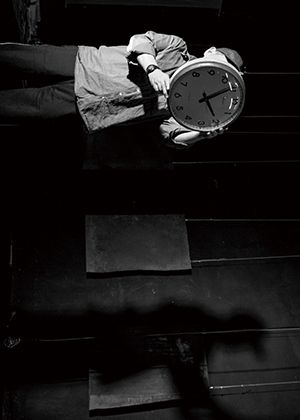
2026臺北藝術節:王墨林《最後的錄音》
2026 TAF:Wang Mo-lin "Epilogues"
節目介紹
時間是「詛咒與救贖的雙頭怪獸」— 山謬.貝克特 Samuel Beckett
★ 台灣小劇場運動先驅者王墨林,首度以單人表演處理「時間、身體、歷史與記憶」,正面凝視「老年」。
★ 「王墨林以終其一生從未放棄的堅持,所呈現出一份小劇場的身體與現代世界的精神狀態的高度對話。」 — 戲劇構作汪俊彥
記憶碎裂、意義失重,我們究竟還剩下什麼?
跨越四十年里程的《最後的錄音》:讓我們提起勇氣,面對那些始終難以言說的
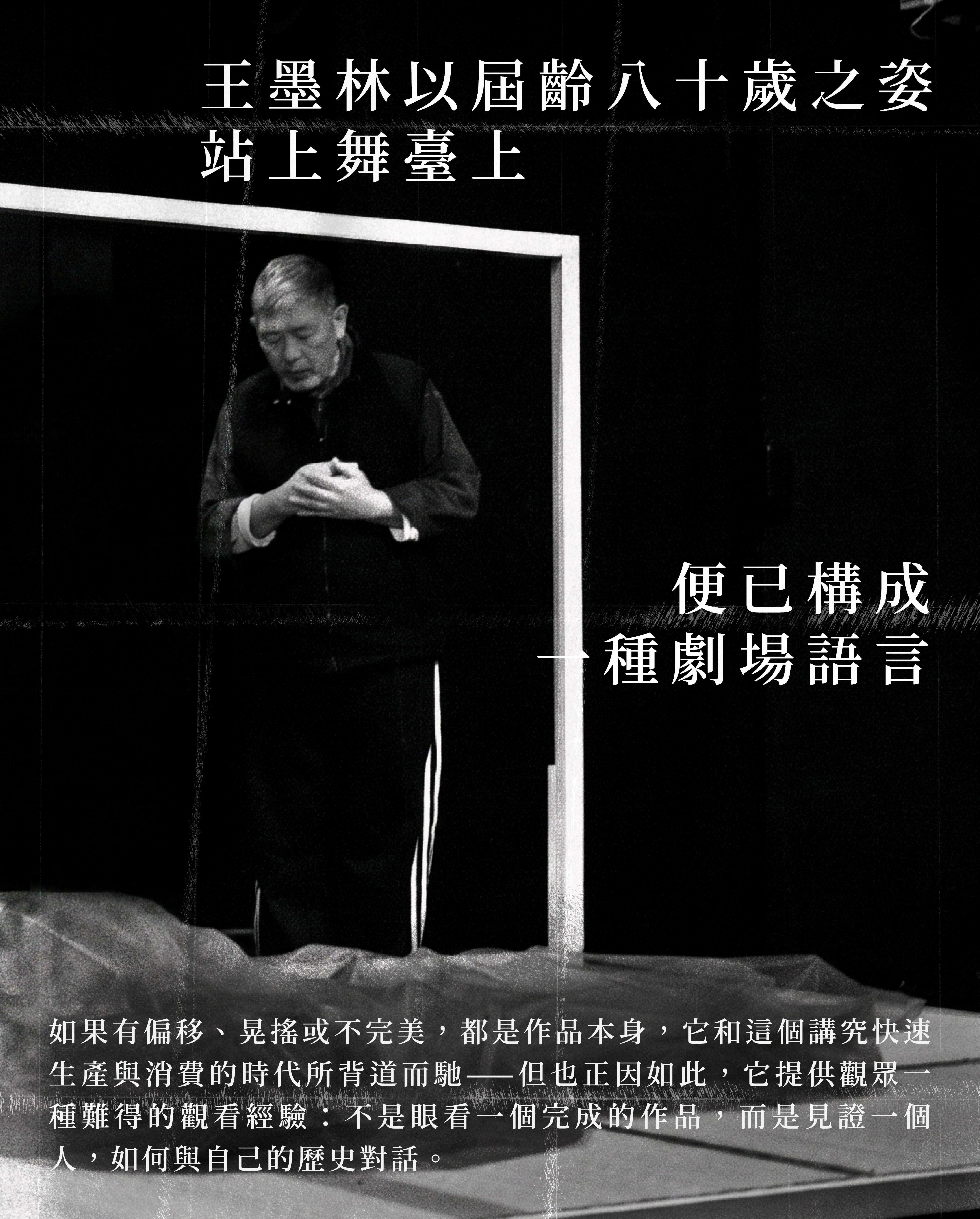
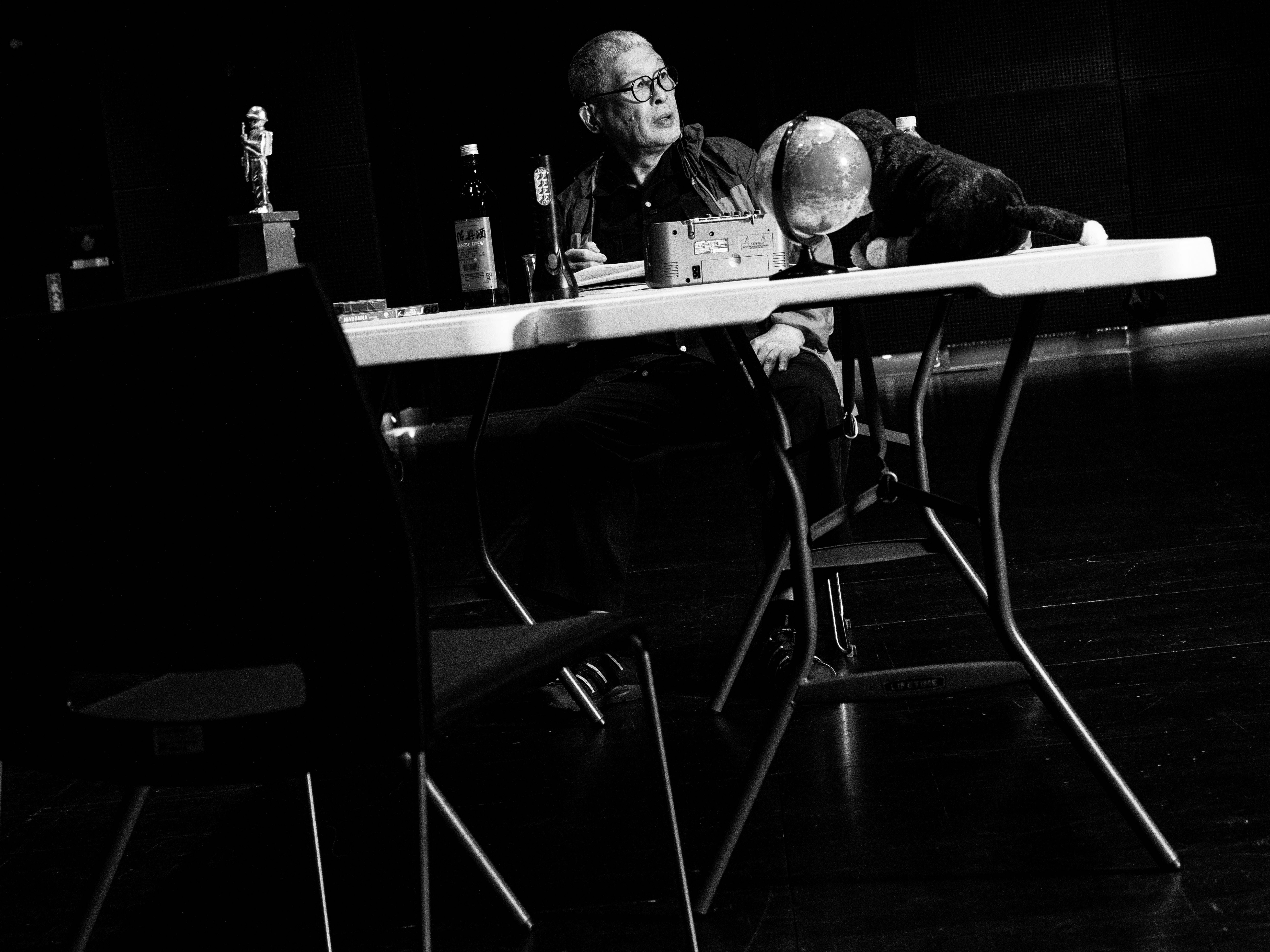
舞台上,僅王墨林一人,以獨腳戲演繹《最後的錄音》,他混融自傳、評論、文件構成作品文本,盤整曾存在時空背景,允許時間穿越,阻隔時代消費,更新陳舊思維框架;王墨林在舞台對話時間節點之種種啟發,那些印刻於人與物質的痕跡/傷痕,以及瀰散於這世界、滲透於縫隙而揮之不去的種種思慮,都將來到觀眾眼前。
從卓明的證言起手,透過一眾迄今仍於藝術道途上的友人們,共組跨世代且具有創意光譜的堅強劇組。
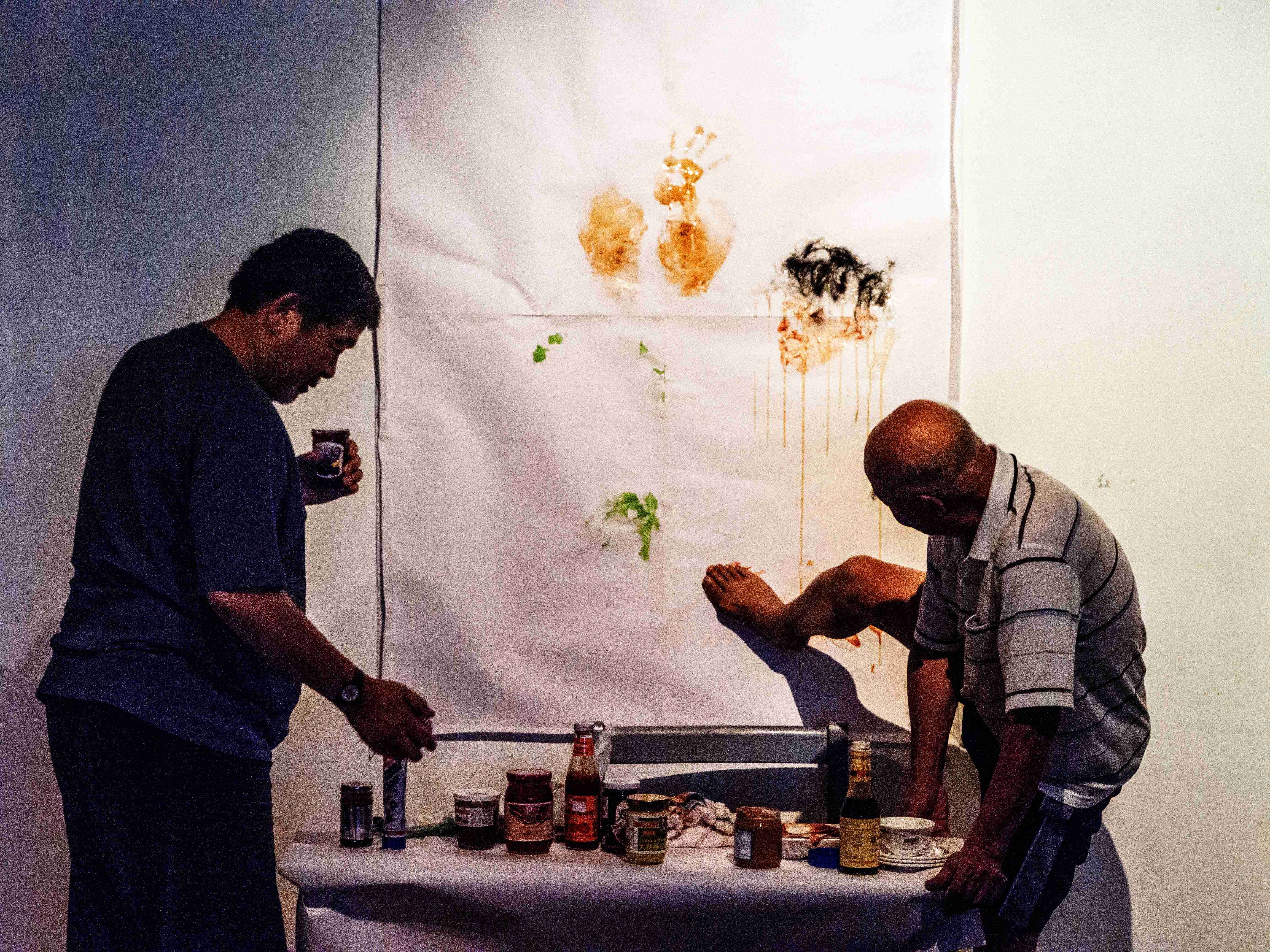
圖| 王墨林與卓明 許斌攝影
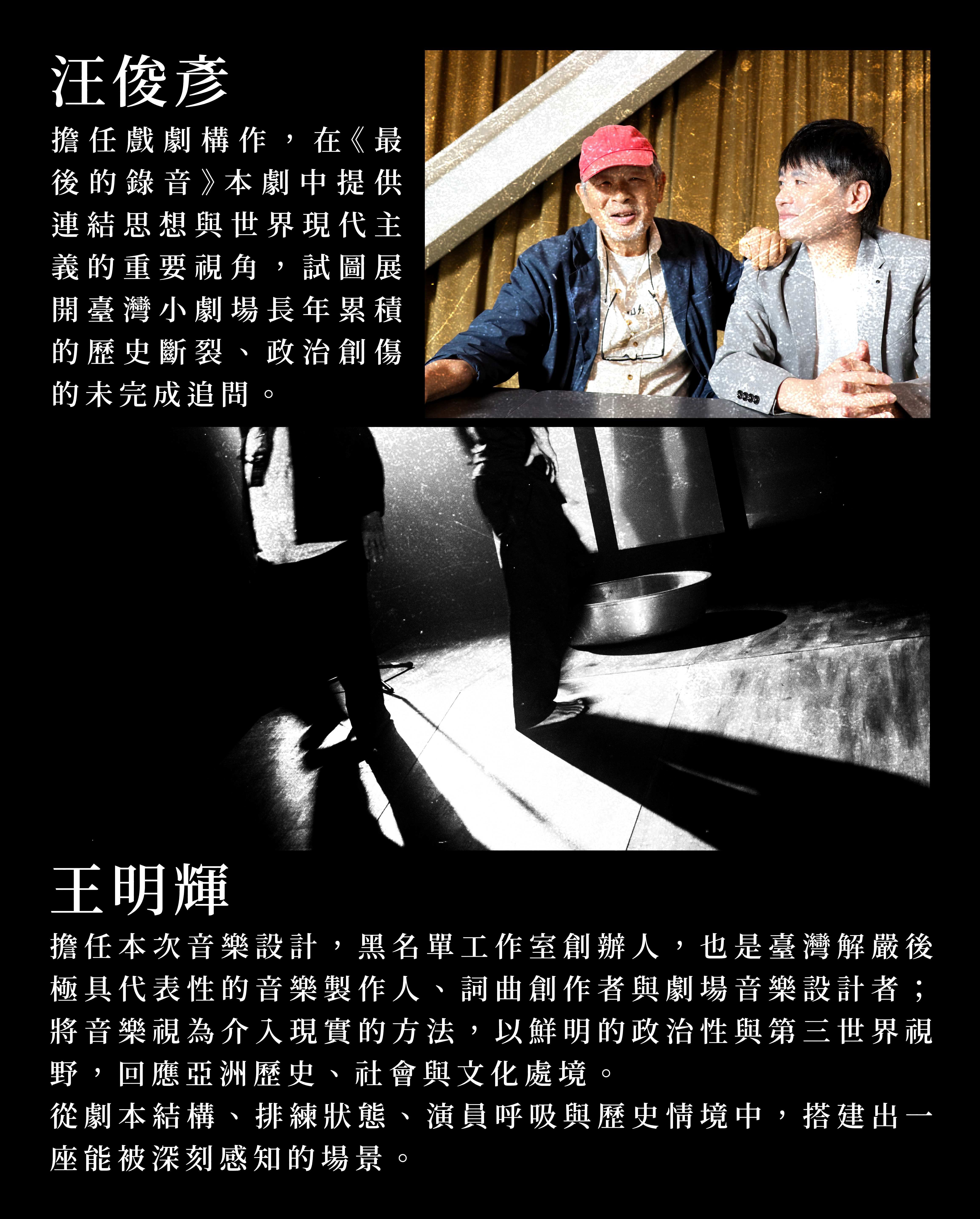
劇組優秀成員涵納吳俊輝、葉澈、吳思鋒、童詠瑋、張宗坤、黃俊諺等人,他們是一股強大支持,將王墨林安放於舞臺,他們共同交織出的話語與景觀——引他細細梳理個人生命、時代斷裂與思想辯證紋理,可能尖銳到殘忍,直到必然浮現的,漸露清晰輪廓。
王墨林曾批評台灣劇場在西方現代性架構下,以民族符號拼貼出一種虛假的本土性。而在《最後的錄音》中,他試圖讓身體捨棄象徵,也不依附風格,讓身體回到物質與歷史層面的探討。因此觀眾直視的,不是一個被建構的角色,而是一具正在經歷時間侵蝕的身體,時間帶來緩慢、遲疑、甚至失誤的外顯現象,然而王墨林也描述自己,「收斂著行動的廣度,卻在不斷深化的知識之道,生氣勃勃地探索著,一面理解各個世代的樣貌,更新或破除著自己意識到的陳舊思維與框架。」
自2010年執導《再見!母親》以來,王墨林持續深化對「演員身體」的思考,將其視為舞台上最核心的存在命題。他透過跨文化合作與不同空間條件的實踐,逐步累積出一套關於表演生成的經驗,關注導演如何引導演員,也整匯出編、導、演三者交織的整體創作結構。在亞際交流的脈絡中,他進一步提出「憂鬱是一種力量」的觀點,將視線投向東亞自1980年代以來的歷史創傷——那些來自身體與心靈的疼痛,在冷戰記憶的陰影下沉積為難以擺脫的精神狀態,形塑出一種深層而持續的孤獨感。
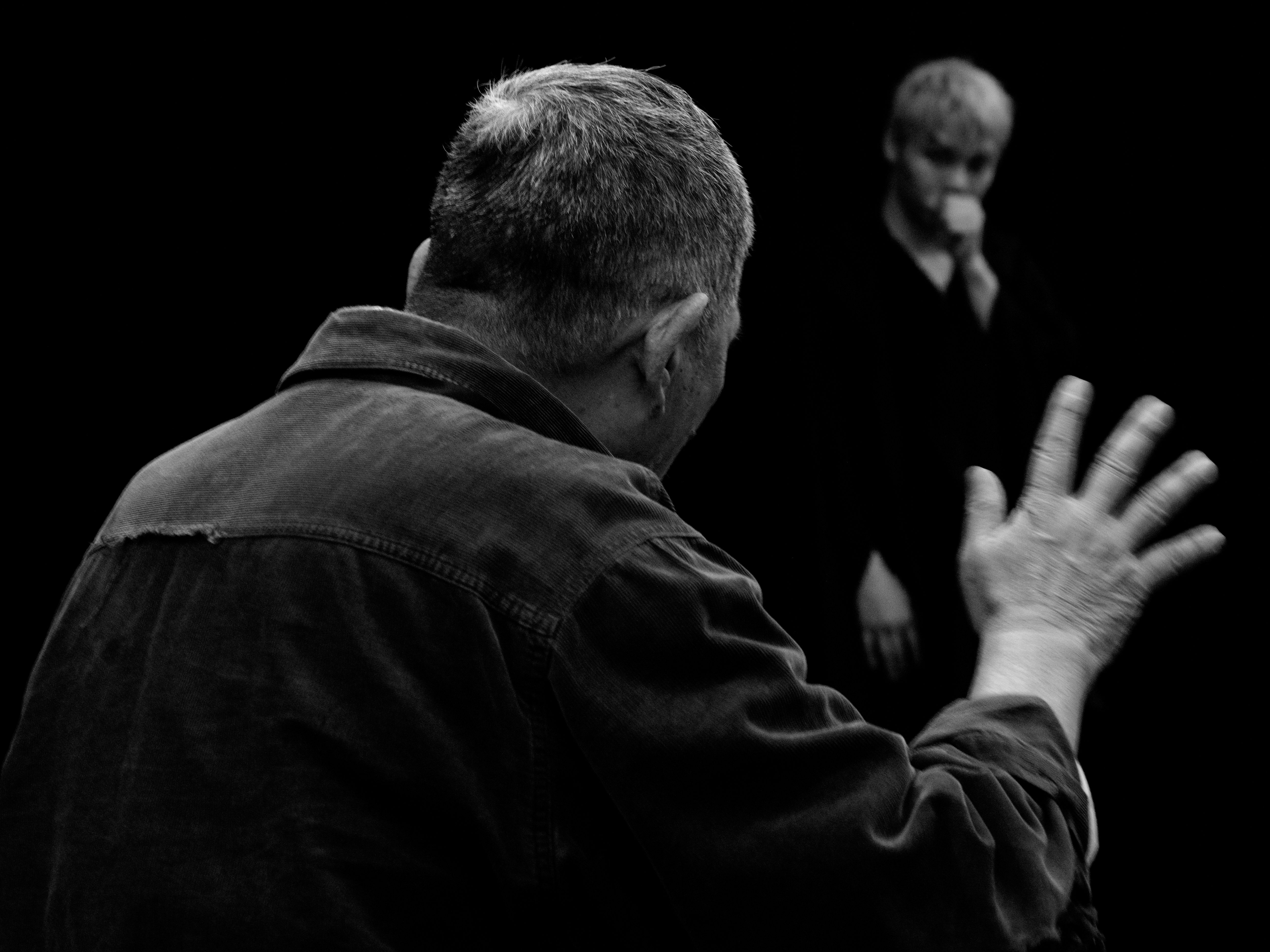
圖| 2021 王子.哈姆雷特 許斌攝影
有什麼正被撬開。
當畫面與聲音變得模糊不可辨,你也進入了《最後的錄音》的過去、現在與未來,歷史從來不能被完整說出,但我們仍然願意練習傾聽,如果劇場在此刻還有任何必要,也許就在此地、此刻,許多事情會變為清楚明朗,正是因為我們在離開劇場之後,願意提起更多勇氣。
【延伸閱讀】
汪俊彥|如果活著跟死了一樣:《最後的錄音》與臺灣小劇場
pupulin|被記憶纏繞的人:專訪《最後的錄音》王墨林
田育志|一場辨認自己與他者的身體行動——外界對王墨林編導演《最後的錄音》的提問(上)
田育志|一場辨認自己與他者的身體行動——外界對王墨林編導演《最後的錄音》的提問(下)
釀藝評|王墨林《最後的錄音》前導導讀:貝克特《克拉普最後的錄音帶》──觀微塵與火
廣藝誌|肉身的邊境與歷史的召喚 王墨林與《最後的錄音》
從王墨林與其台灣戲劇史認識談起
【藝術家介紹】
王墨林(Wang Mo-lin)
劇場導演,行為藝術表演者,文化批評者。上世紀80年代投身解嚴前後台灣小劇場運動,一路創作至今。
1949年生於台南,十八歲時考進政戰學校戲劇系,畢業後於軍中服役十年。以少校退伍後,1982至1984年赴日本東京探研日本小劇場、舞踏等,深受「身體論」之啟發,成為其日後觀察與論述的核心。返台後於《人間》雜誌擔任兩年文字記者,1987年解嚴後旋即策劃了在海邊廢墟演出的環境劇場《拾月》,並於1988年推出台灣第一個行動劇場《驅逐蘭嶼的惡靈》。1991年成立身體氣象館,以「身體論」貫串其後策展、導演、論述等工作,曾發動的重要劇場行動、藝術節包括:行動劇場《驅逐蘭嶼的惡靈》(1988)、「身體與歷史:表演藝術祭」(1992),擴展身心障礙者在劇場的表演人權及美學的「第六種官能國際表演藝術祭」(2001)、「顏色狂想藝術祭」(2002)等,並以駐節藝術家、工作坊導師等身分赴布魯塞爾、倫敦、香港等地的藝術節訪問,2005-2008年擔任牯嶺街小劇場藝術總監。
編導有「黑洞」系列與「莎士比亞戲劇單人表演」系列等二十多部作品。第二十一屆國家文藝獎得主(2019) 。著有《後昭和日本像》、《都市劇場與身體》與《台灣身體論》等。
他的劇場創作結合社會運動與劇場行動,挑戰主流論述,持續對抗體制對自我、身體的宰制。透過創作與論述,對台灣當代劇場研究,從劇場作為社會實踐、文化運動的立足點,建構其獨特的美學架構與辯證史觀。長年的劇場實踐,持續一以貫之的批判精神,展現不妥協的時代意義。
【製作單位】
身體氣象館
台灣非營利跨文化交流之先驅藝術團體。於1991年由台灣小劇場先驅人物王墨林所組成。創立迄今,以國際藝術節策畫與劇場製作,成就台灣與世界各地的藝術家彼此交流,進行多面向的美學思辨,為台灣劇場於小劇場運動之後,全新開啟與世界對話之窗。歷來策畫、製作之重要活動,皆為「以不同的文化肢體語言的展現,從事新的表演美學之探討」為主要目的。
從1992年邀請荷、台、日、港等地藝術家參與的「身體與歷史:表演藝術祭」,首創台灣國際行為藝術節雛型,至2003年大型的「台北國際行為藝術節」,為台灣小劇場與當代藝術之間建立一種範式。而自1996年邀請法國導演培松地來台製作新戲,更為日後台灣與法國的當代劇場藝術交流寫下前衛的一頁,帶領出許多台、法青年藝術家,於歐洲與亞洲不斷走出交流與創作的軌跡。1997年製作的大型原住民希臘悲劇《TSOU.伊底帕斯》,既是西方戲劇經典迄今唯一的台灣原住民語文舞台版本,也是台灣民間機構與中國國家劇院直接合作的空前之舉(迄今仍無後例)。2001年,舉辦「第六種官能表演藝術祭」,長期發展身障者表演藝術,讓「表演人權」思潮真正導入台灣表演美學論述,於東京、北京、香港、首爾等地藝術節與公演。
近二十年間,身體氣象館悉心維繫東亞網絡,作品包括亞洲相遇匯演計畫的四城巡迴演戲劇作品《魯迅二零零八》等作、《黑洞3》(2011高雄/台北/澳門)、《長夜漫漫路迢迢》(2013澳門藝術節/2015台灣國際藝術節,第十四屆台新藝術獎)、韓國國際無障礙舞蹈節《關於生之重力的間奏式》(2017首爾) 、《脫北者》(2018首爾) ,以及莎士比亞戲劇單人表演系列(迄今四作)。
2005年起,成立「小劇場共同營運實行委員會」,傾力經營牯嶺街小劇場,致力實踐文化的公共性,將之打造成一亞洲知名的表演創意基地,提攜新世代表演藝術工作者發展劇場創意。
【演職人員名單】
概念、導演、表演 | 王墨林
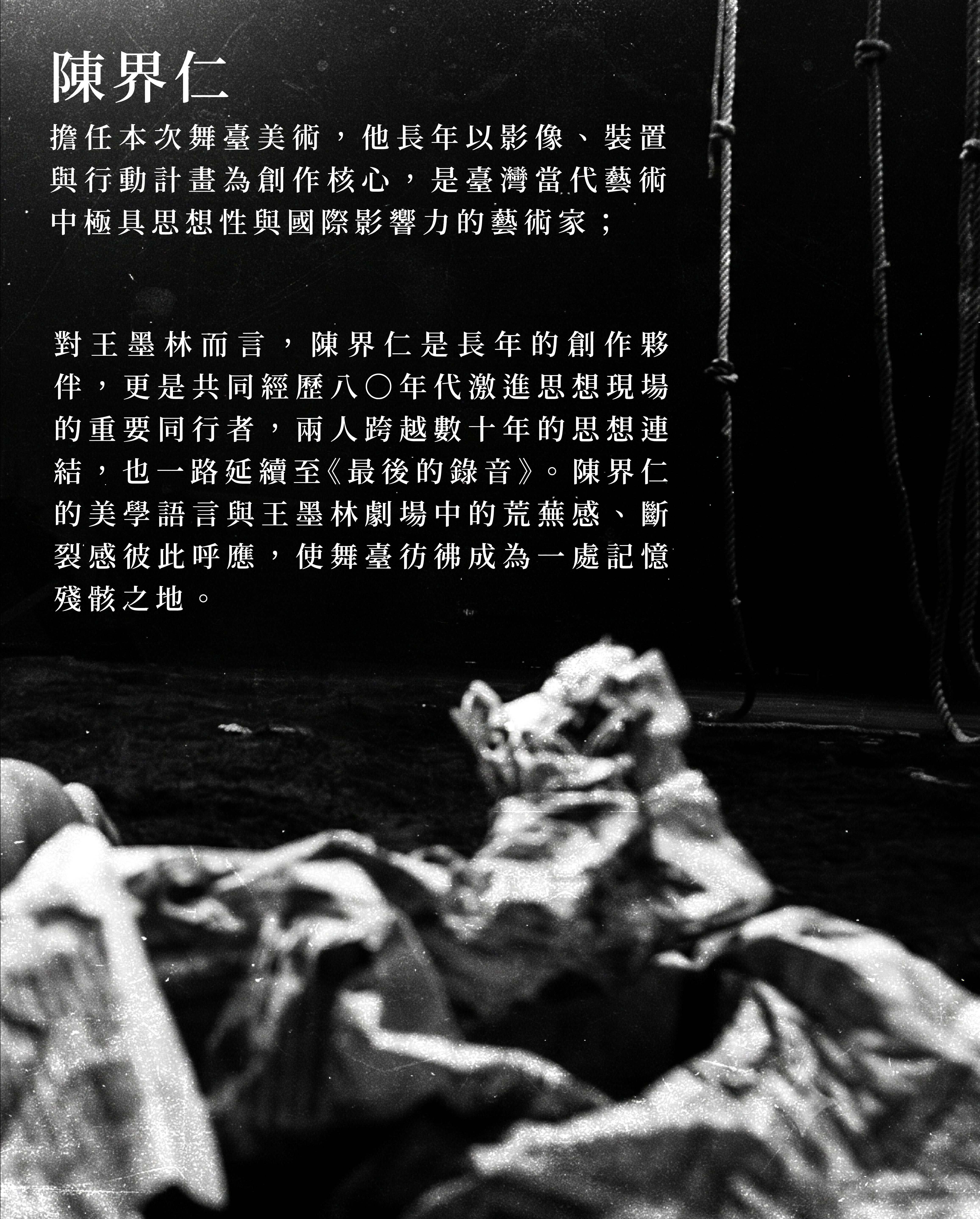
舞台美術 | 陳界仁
音樂設計 | 王明輝、楊政、工夫沸騰
影像設計 | 吳俊輝、葉澈
燈光設計 | 黃俊諺
戲劇構作 | 汪俊彥
文本協作 | 吳思鋒、童詠瑋、劉雅芳
助理導演 | 童詠瑋
製作人 | 姚立群、楊凱婷
執行製作 | 蔡嘉鳳
舞台監督 | 林家瑜
舞台技術統籌 | 許宗仁、羅婉瑜
音響技術統籌│陳宇謙 (牙籤)
影像技術統籌 | 黃彥勳
燈光技術指導 | 吳子嫻
導演助理 | 牟若婷、張宗坤、彭威元
英文翻譯 | 吳哲弘
攝影紀錄 | 許斌
影像紀錄 | 穀雨展演協創
平面設計 | PoPo
製作紀錄彙編 | 游家榕
共同主辦:臺北市政府、臺北表演藝術中心
[ Show Introduction ]
Epilogues features Wang Mo-lin , now in his later years, appearing on stage in person. The work unfolds as a theatrical document performance, anchored in the final recorded interview of his late friend Zhuo Ming.
As a second-generation waishengren (Mainlander) born and raised in postwar Taiwan, Wang’s formative years took him from Tainan—the island’s historic former capital—to Taipei. There, he grew into what his mother described as a youth “without fear of consequence.” Confronted with his unruly, Nezha-like rebellious energy, his father sent him to a political warfare cadet school, where he underwent strict military discipline. It was through this institutional trajectory that, in the early 1970s, he met his senior Zhuo Ming, who would later become a lifelong artistic comrade as both entered the turbulent emergence of Taiwan’s Little Theatre movement.
Over more than four decades, anyone who sustained attention to Taiwanese theatre and cultural activism inevitably encounters Wang’s presence. His trajectory cuts across multiple social movements, marked by a persistent vitality and a series of encounters, frictions, and collisions with diverse artistic fields. As a pioneering and still-active figure of Taiwan’s Little Theatre movement, Wang has developed a distinct trajectory across both discourse and performance.
With advancing age and the gradual decline of the physical body, the breadth of his actions may have narrowed, yet his intellectual inquiry continues to deepen. He remains actively engaged in understanding different generations, while constantly revising or dismantling the outdated frameworks he has come to recognize within himself.
“Creative freedom has always been an expression of the self. Yet the symbolic function of this lump of dried excrement expresses a hollowing out of spiritual energy, leaving the self reduced to a mere bodily gesture. The dialectical relation between world and body becomes alienated into a relation between world and excrement, fundamentally incapable of sustaining any resistance through internal spiritual force.” (Wang Mo-lin)
Since directing 'Mom, Bye' in 2010, performed by two Korean actors, Wang has undertaken sustained research into the significance of the actor’s corporeality on stage. Through cross-cultural practice and varied performance conditions, he has accumulated extensive insights. His work not only examines how directing can deepen the actor’s performance and interweave the processes of writing, directing, and acting into a cohesive stage form, but also, through inter-Asian exchanges, increasingly focuses on the proposition that “melancholy is a form of power.” This perspective probes the traumas carried across East Asia since the 1980s—whether physical or psychological—rooted in Cold War memory, and sedimented over time into an inescapable condition of spiritual melancholy and solitude.
In this work, Wang constructs a text that merges autobiography, criticism, and archival documentation, reorganizing historical contexts and reflecting on visible temporal nodes on stage. It traces the imprints—marks and wounds—left on people and material objects, as well as the lingering thoughts that permeate the world, seeping into its fissures and refusing to dissipate. This complex undertaking begins with Zhuo Ming’s testimony and unfolds through ongoing dialogues with contemporaries such as Chen Chieh-jen (陳界仁), assembling a cross-generational ensemble whose creative spectrum generates a collective meditation on the present.
Epilogues also stands as a sincere milestone work for the Body Phase Studio, founded by Wang in 1991, marking a journey spanning over four decades.
[ Artist Introduction ]
Wang Mo-lin Wang
Mo-lin was born in Tainan in 1949. At the age of eighteen, he was admitted to the drama department of Fu Hsing Kang College. After graduation, he served in the military for ten years, and after retiring at the rank of major, went to Tokyo from 1982 to 1984 to study sho-gekijo, literally little theatre, and Butoh dance. He was deeply inspired by Yasuo Yuasa's notion of body, which became the core of his future observations and discourse. After returning to Taiwan, he worked as a journalist for two years at Ren Jian magazine. In 1987 soon after martial law was lifted, he planned the environmental theater event October, which was performed on the site of disused structures near the sea, and then in 1988, presented Taiwan's first action theater work, Driving Evil Spirits off Lanyu Island. In 1991, Wang established Body Phase Studio, which promoted performance art in Taiwan by planning the International Performance Art Festival. From 2005 to 2008, he served as the artistic director of Guling Street Avant-garde Theatre. Wang has directed many plays, including the Black Hole series and Solo Shakespeare Project, and authored Portrait of Post-Showa Japan, Urban Theater and the Body and On the Taiwanese Body. Wang Molin's work combines social movements with action theater to challenge the mainstream and resist mechanisms that continue to dominate the individual and body. Through his works and writings about contemporary Taiwanese theater, Wang has established a foothold in theater as social practice and cultural movement, and constructed his work's unique aesthetic framework and dialectical view of history. His long-term theater practice continues with a sustained critical spirit, showing the significance of the times without compromise.
Body Phase Studio
The Body Phase Studio is a revolutionary non-profit Taiwanese arts group dedicated to international cultural exchange. It was founded by Wang Mo-Lin, a pioneer of independent theatre in Taiwan. Since its establishment in 1991 till today, by hosting various international arts festivals and theatrical productions, it has enabled Taiwanese artists to exchange aesthetic ideas and perspectives with their international counterparts. It can be said the studio has opened a window to the world for local theatre professionals following the Independent Theatre Movement of the 80s. In 2005, founding the Guling Street Avant-garde Theatre Executive Committee, the arts group consistently advocates the convergence, interaction and opinionating of different groups holding the same contemporary spirit.
[ Credit List ]
Concept, Director & Performer | Wang Mo-Lin
Set Design | Chen Chieh-Jen
Music Design | Wang Ming-Hui, Yang Cheng and KonFuFighting
Projection and Video Design | Wu Chun-Hui, Yeh Che
Lighting Design | Huang Chun-Yen
Dramaturgy & Development | Wang Chun-Yen
Text Collaboration | Wu Sih-Fong, Tung Yung-Wei、Liu Ya-Fang
Assistant Director | Tung Yung-Wei
Producers | Yao Lee-Chun, Yang Kai-Ting
Executive Producer | Tsai Chia-Feng
Stage Manager | Lin Chia-Yu
Stage Technical Directors | Hsu Tsung-Jen, Luo Wan-Yu
Audio Technical Director|TP Chen
Video Technical Supervisor|Huang Yen-hsun
Master Electrician | Wu Tzu-Hsien
Assistant Director | Mou Ruo-Ting, Chang Zong-Kun, Peng Wei-Yuan
Translator | Ngo Tjer-Hong
Photographer | Hsu Ping Video
Documentation | Grain Studio
Graphic Design | PoPo
Casebook Editor | You Jia-Rong
折扣方案
了解更多北藝會員:https://tpacplayer.org/q3t4z
2026.6.15(一)中午 12:00 ── 6.22(一)11:59 付費會員預購
付費會員優惠:
●北藝中心會員──成癮玩家75折,滿3場送1張5折券
●北藝中心會員──團隊玩家4張以下85折、單場單筆訂單4張(含)以上8折、10張(含)以上75折
2026.6.22(一) 中午 12:00 正式啟售
會員優惠:
●北藝中心會員──成癮玩家85折,滿3場送1張5折券
●北藝中心會員──團隊玩家4張以下85折、單場單筆訂單4張(含)以上75折、10張(含)以上7折
●北藝中心會員──新手玩家9折,北藝官網免費註冊享購票優惠
熟客優惠:
2026.6.22(一)中午 12:00 ── 7.26(日)23:59
曾購買2025年臺北藝術節主辦節目,且2026.6.15(一)中午12:00前為新手玩家身份者,將於2026.6.15(一)獲得專屬 85 折券2張(使用期限至2026.7.26(日))
新手玩家套票優惠:(請由上方套票分類內連結購買)
2026.6.22(一)中午 12:00 ── 7.26(日)23:59
購買1000元(含)以上票券 ── 2張享88折,3張(含)以上享85折
TPAC會員限定套票:(請由上方套票分類內連結購買)
凡完成 OPENTIX 綁定之北藝會員,可享會員限定活動套票1+1優惠。
2026.6.15(一)中午 12:00 起
成癮玩家/團隊玩家購買臺北藝術節主辦節目 75 折 +TPAC 會員限定:《身體的隱形連線》表演體驗課優惠價 199 元。
2026.6.22(一)中午 12:00 起
新手玩家購買臺北藝術節主辦節目 9 折 +TPAC 會員限定:《身體的隱形連線》表演體驗課優惠價 299 元。
異業優惠:
2026.6.22(一) 中午 12:00 起
誠品會員、玉山銀行、台北富邦銀行、台新銀行卡友購票享優惠92折
團票優惠:
●單場單筆訂單 20 張(含)以上 8 折
●單場單筆訂單 50 張(含)以上 75 折
●單場單筆訂單 100 張(含)以上 7 折
其他優惠:
●身心障礙人士及陪同者(限1人)購票享5折優惠,入場時應出示身心障礙證明,陪同者與身障者需同時入場。
●年滿65歲以上長者購票享5折優惠,入場時請出示有效證件。
※ 主辦單位保留節目異動權及折扣解釋權
退票期限:
最遲須在演出日1日前(不含演出日)辦理,逾期無法受理。
例:演出日為6/29,最後退票期限為6/28。
退票手續費:
每張退票收取票面售價10%手續費。換票視同退票,需退票後重新購買。
申請方式:
【選擇電子票或尚未取紙本票】
- 以「信用卡、行動支付、文化幣全額支付」購票:
請使用OPENTIX線上退訂單功能,至會員>訂單紀錄>點入要退訂的訂單,按下「退訂單」勾選欲退項目,線上完成退訂。
※請留意,每日23:30-00:00為系統結算期間暫停服務。請務必留意退票期限,提前申請。
※購買團票、套票或其他無法使用退訂單功能時,請至網站勾選項目1,填寫訂單資料辦理。申請的退票如符合退票規則,將於3個工作日內執行退票作業。 以「ATM轉帳、現金」購票:
請至網站勾選項目2,填寫訂單資料並附上存摺照片辦理,申請的退票如符合退票規則,將於3個工作日內執行退票作業。
※ATM轉帳繳費時產生的轉帳手續費由銀行收取,如有退票情形(含換、補票及節目異動之退票),轉帳手續費恕無法一併退還。
【已取紙本票】
請由下述退票方案擇一辦理:
- 臨櫃退票:請於服務時間內,至OPENTIX臺北、臺中、臺南、高雄四大服務處辦理。
- 郵寄退票:請將存摺影本(刷卡購票無須提供)、票券、姓名電話等聯絡資訊於退票期限前(郵戳為憑),掛號郵寄至「100012臺北市中正區中山南路21-1號 OPENTIX 退票小組收」。退票郵寄前請記下票面之訂單編號,並請妥善保存掛號收據。
※郵寄退票之退票手續費發票將預設存入OPENTIX會員載具,如有其他需求,請郵寄後致電客服中心(02)3393-9888。
※以ATM轉帳或現金付款之票券,將在收到郵寄退票申請後,最遲10個工作日內轉帳至所提供之存摺帳戶;以刷卡付款之票券,退票款項將退還至原刷信用卡。
注意事項:
如購票時使用文化幣或點數折抵,退票時,系統將退還折抵之全額文化幣,並於扣除退票手續費後,優先退還點數,再將剩餘款項退回。特別提醒,退票時(含換、補票及因節目異動之退票),原訂單所抵用的點數、文化幣、優惠券已逾使用效期,恕無法補發或展延效期。(如優惠券發放之主辦單位另有規劃者,依該主辦單位規範辦理)
【優惠組合退票】若購買兩個品項以上之優惠組合,退票須全數辦理退票,或退票後剩餘數量仍符合原優惠組合規則,方可辦理。
【套票退票】套票退票需整套辦理,無法以單張票券申請退票,亦不接受換票。如購買不同場次票券,最遲需於所購買的首場演出日1日前(不含演出日)辦理,如套票另有規定者,請依套票頁面之注意事項為主。
※ 依據文化部「藝文表演票券定型化契約應記載及不得記載事項」第3點規定,若本節目因故取消、延期舉行之主要表演人員或主要節目內容,於預定表演前發生變動時,相關退票機制、受理方式、退款途徑等資訊,將另行公告於本節目頁面;若遇上述異動情境,主辦單位未提供退款機制時,以信用卡購票之持卡人,可向原信用卡發卡行申請信用卡爭議款退款。
共同主辦|臺北市文化局