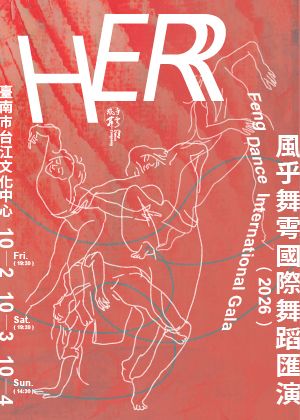
購票資訊
節目介紹
2026年的風舞團提出「女性」為核心,女性常被置於文化、道德與權力的交匯處,女性往往被凝視、規訓或失語;然而,舞蹈作為一種不依賴語言的行動,反成為女性重新取回感知主權與敘事的方式。
風舞團透過這場策展活動,將聚焦來自台灣、韓國、日本、美國、泰國、越南及香港的編舞家,揭示女性在傳統與當代之間,突破沈默,寫下屬於女性的聲音。本計劃試圖透過跨國的舞蹈展演,呈現女性如何實踐主體性,並展開橫跨疆界的感知連結與集體發聲。
In 2026, Feng Dance Company adopted “Women” as the central curatorial theme. Women have long been positioned at the intersection of culture, morality, and power, often subjected to the gaze of others, social discipline, or the loss of their own voices. Yet dance, as an embodied practice that transcends spoken language, has become a powerful medium through which women reclaim agency over their perceptions and rewrite their own histories.
Through this curatorial project, Feng Dance Company brings together choreographers from Taiwan, South Korea, Japan, the United States, Thailand, Vietnam, and Hong Kong, highlighting how women navigate between tradition and contemporaneity, break through silence, and express their own voices. By presenting this international platform of dance performances, the project seeks to explore how women assert their subjectivity while fostering transnational connections, shared experiences, and a collective voice that transcends borders.
台灣|《Seeking you》|顏鳳曦
今天,我聞到了祢的味道。溫暖,而清香。
有些記憶,沒有消失。
它藏在風裡、光裡,
也藏在最深的地方。
當熟悉的氣息再次靠近,
我知道——
祢一直都在。
Taiwan|《Seeking you》| Dominique Feng-Hsi Yen
Today, I caught Your scent—warm and gently fragrant.
Some memories never fade.
They linger in the wind, in the light,
and in the deepest places of the heart.
When that familiar fragrance drew near once more,
I knew—
You have been here all along.
韓國|《The Flower and The Hammer》|Doyu Kim
是一部探討長久累積於女性身體之上的沉默、競爭、控制與壓迫結構的作品。
透過這件作品,我試圖質疑那些以「舞蹈」之名不斷被複製的階層制度,以及歷史上長期要求女性服從的社會機制。
尤其,我希望直面一種結構性的現實:女性在生存焦慮之下,被困於彼此傷害與孤立的循環之中。
在此,我引用了 Trinh T. Minh-ha 所提出的「Inappropriate/d Others(不被納編的他者)」概念——那些最終拒絕被主流體制與其邏輯完全收編的存在。
透過這件作品,我希望召喚那些未被同化的存在現身於舞台之上。
同時,我也試圖將那些消失身體的記憶、情感與數據,重新與當下的自身身體連結。
最終,《The Flower and The Hammer》成為一場屬於未被同化、拒絕放棄自身存在之女性身體的當代儀式。
Korea|《The Flower and The Hammer》|Doyu Kim
《The Flower and The Hammer》 is a work that explores the structures of silence,competition, control, and oppression that have long accumulated upon women bodies. Through this piece, I seek to question the hierarchical systems repeatedly reproduced in the name of dance, as well as the sense of obedience historically demanded of women.
In particular, I wish to confront the structural reality in which women, under the
anxiety of survival, become trapped in cycles of hurting and isolating one
another.
Here, I draw upon Trinh T. Minh-ha’s concept of “Inappropriate/d Others”— beings who ultimately refuse to be fully appropriated into the order and logic of dominant system.
Through this work, I aim to summon those unassimilated presences onto the
stage.
In doing so, I seek to reconnect the memories, emotions, and data of those
disappeared bodies with my own body in the present moment.
Ultimately, 《The Flower and The Hammer》 it becomes a contemporary ritual for unassimilated female bodies who refusing to surrender their own existence.
日本|《She Who Stands Between》|岡戶香里
此舞作探索一種介於文化、時間與形式之間的生命狀態。
舞者出生於日本,在西方當代舞的訓練中成形,並於爪哇宮廷舞蹈傳統中轉化自身。她化身為一種「介於其間」的存在,行走於多重邊界之上——
女性與男性、傳統與即興、人與自然、可見與不可見之間。動作如流動與循環般自然生成。佇立於連結之點,她的舞蹈是一種 「結(musubi)」 的動:一個持續流動、連結生命的活生生之結。
Japan|《She Who Stands Between》|Kaori Okado
This dance explores a life lived between cultures, times, and forms.
Born in Japan, shaped by Western contemporary dance, and transformed through Javanese court traditions, the dancer embodies a presence that stands between worlds.
She moves across boundaries — feminine and masculine, tradition and improvisation, human and nature, visible and invisible — allowing movement to emerge as flow and circulation.
Standing at the point of connection, she dances as an act of musubi : a living knot that binds life as it continues to flow.
泰國|《HE(R)》|Aditep Buanoi
有一種溫柔,從未屈服。
有一種柔軟,不曾削弱力量。
有一種力量,不需要向任何人證明自己。
《HE(R)》 起源於一系列名為 Coffee Talks 的對話交流。
來自不同背景的人們聚集在一起,透過這些對談,共同反思自己對「女性特質(the feminine)」的理解——它並非關乎性別,而是一種存在的方式。隨著故事逐漸展開,一些共同的特質不斷浮現:傾聽、臣服、關懷、脆弱,以及安靜而堅定的力量。受到這些共同反思的啟發,《HE(R)》 展開了一場關於女性特質的編舞探索。它並非將女性特質視為專屬於女性,而是視為一種普遍存在於人性中的品質。透過三位交織的身體,作品探索了「退讓如何成為韌性」、「傾聽如何化為行動」,以及「脆弱如何成為一股安靜卻深刻的力量」。
這只是這段持續進行的藝術研究旅程的第一章。隨著創作持續發展,《HE(R)》 將進一步擴展成一部更完整的作品,深化其對話,並邀請觀眾重新理解「柔軟」——它並非軟弱,而是人類力量最深層、最珍貴的來源。
Thailand |《HE(R)》|Aditep Buanoi
There is a softness that does not surrender.
A tenderness that does not weaken.
A strength that asks for nothing to prove.
HE(R) began with a series of Coffee Talks.
Gathering people from different backgrounds, these conversations invited participants to reflect on the qualities they associate with the feminine - not as gender, but as a way of being. As stories unfolded, certain qualities surfaced again and again: listening, yielding, intuition, care, vulnerability, and quiet strength.
Inspired by these shared reflections, HE(R) marks the beginning of a choreographic inquiry into the feminine as a human quality rather than womanhood. Through 3 intertwined bodies, the work explores the spaces
where yielding becomes resilience, listening becomes action, and vulnerability becomes a quiet force.
This is the first chapter of an ongoing artistic journey. As the research continues to evolve, HE(R) will expand into a larger work, deepening its dialogue and inviting audiences to rediscover softness - not as weakness,
but as a profound source of human strength.
美國|《Fit in》|楊雯筑
主要創作概念是將裝置藝術與舞蹈的結合,在舞台上擺放多雙不同種類的鞋子。空間因鞋子的限縮阻礙範圍做為主要的舞蹈表演區,以細膩而充滿戲劇張力的肢體動作充滿空間。三位各具特質的表演者在更換不同的鞋子所產生的立足點的改變下而呈現動作質地的不同。強調「重心與專注」的視覺效果。亦反應女性早期因三吋金蓮或高跟鞋的局限,舉步維艱在男性的社會體制下限制延伸至現今女性如何努力在男性工作體制下獨立與生存。在不同的鞋種與鞋子尺碼上,讓舞者《fit in》鞋子就如同人們如何融入不同的環境中,以身體的特殊記憶所創造出來的舞作。 在單腳擠壓穿小鞋下,觀賞者反更能將視線聚焦於表演者的肢體與動作,凸顯出舞者單腳重心的轉換與危險中控制動作的微妙變化,在穿不適合的小鞋下更明顯強調壓迫對現代人的影響,由舞蹈動作來省思環境對人的變遷。
UAS|《Fit in》| Wen-Chu Yang
This work combines installation art and contemporary dance, transforming the stage into a landscape of shoes of various styles and sizes. The arrangement of the shoes functions both as an installation and as a physical boundary, defining the performers’ movement and creating a space for the body to negotiate its presence.
Three performers continuously change into different pairs of shoes, allowing each pair to reshape their balance, center of gravity, and movement quality. Through subtle yet highly expressive physicality, the choreography reveals the body’s ongoing negotiation between stability, vulnerability, and control.
Inspired by the historical restrictions imposed on women through symbols such as bound feet and high heels, the work reflects on how women’s bodies have long been shaped by social expectations and patriarchal structures. It further extends this reflection to the challenges women continue to face while seeking autonomy and a place of their own within contemporary society and the workplace.
As the dancers attempt to fit into shoes of different styles and incorrect sizes, the work becomes a metaphor for adapting to unfamiliar environments and social roles. The physical memory created through pressure and discomfort forms the foundation of the choreography, inviting audiences to reconsider how external environments, social expectations, and institutional systems continue to shape our bodies, identities, and ways of existing.
韓國|《Hazy》|Jeong-Eun Hwang
《Hazy》探索時間在我們內心留下的情感痕跡與餘韻。
如同墨水滲入紙張——擴散、模糊,最終乾燥成淡淡的印記——情感也在身體中流動,逐漸沉澱為細膩的記憶層次。
本作品將這些擴散、消散與邊界模糊的過程轉化為動作語言,邀請觀眾去感受那些看不見卻持續存在於內心的事物。
Korea|《Hazy》|Jeong-Eun Hwang
This dance explores a life lived between cultures, times, and forms.
Born in Japan, shaped by Western contemporary dance, and transformed through Javanese court traditions, the dancer embodies a presence that stands between worlds.
She moves across boundaries — feminine and masculine, tradition and improvisation, human and nature, visible and invisible — allowing movement to emerge as flow and circulation.
Standing at the point of connection, she dances as an act of musubi:
a living knot that binds life as it continues to flow.
越南|《Brightly mist》|Neo Nguyen
越南當代舞正處於其身分認同發展的重要關鍵時刻。如何發展出一種既具有廣泛當代性,同時又深植於在地文化的表現語彙,是當前重要的探索方向。
作品靈感來自作家 Nguyễn Ngọc Tư(阮玉思)的作品《Khói Trời Lộng Lẫy》(The Magnificent Sky Smoke/《絢麗天煙》)。作品融合「Cương(剛)」與「Nhu(柔)」兩種獨特元素,在兩股看似對立的文化流動之間展開身體對話:一方面是京族(Kinh)民間舞蹈的柔軟與流動性,另一方面則是越南武術 Vovinam 的力量與果決。
Vietnam|《Brightly mist》|Neo Nguyen
Vietnam Contemporary Dance is at a crucial juncture in the development of its identity. How to develop an expressive language that is simultaneously broadly contemporary and profoundly in local culture.
Inspired by the work "Khói Trời Lộng Lẫy" (The Magnificent Sky Smoke) by writer Nguyễn Ngọc Tư. Bringing together the particular elements of Cương (Hardness)and Nhu (Softness), the piece is a physical dialogue between two seemingly opposing cultural flows: the softness and fluidity of Kinh folk dance and the strength and decisiveness of Vietnamese martial arts (Vovinam).
香港|《Call Me By My Name》|姜凱翎
《以我之名》是一場以姓名為鏡,深刻叩問身份認同、文化傳承與自我重塑的編舞實踐。
作品從我的原名「加兒」展開——這個祖父賜予的名字,承載著對孫輩的性別期待。在中國傳統宇宙觀中,姓名是具有振頻的錨點;而被賦予「缺席的隱喻」(「未降生的兒子」),猶如讓我在自我認同中始終「懸置」的詛咒。
父母的抗爭由此開始。父親提議請算命師為我重擇「凱翎」或「茜翎」二名,宣稱「上天賜名,祖父不得違逆」。這個父母保護女兒的行動是以傳統之矛攻傳統之盾的巧妙反抗,然其名義力量仍是「被授予」而非「自主擁有」。作品更審視我的殖民英文名「Stephanie」——在歐洲遭遇語言傲慢時,這個名字成為文化否定的媒介。當對方追問「真名」卻又拒絕稱呼我的中文名時,我意識到英文名本是殖民者消弭文化身份的工具。於是重拾本名成為我的去殖民化實踐:既是對祖源的精神回歸,更在於重新定義「名」中的祝福,以此實踐自我賦權的神聖宣告。
這場演出剝開命名儀式中父權與殖民的共生結構,從家族期望到系統性抹除。透過身體語彙,《以我之名》叩問歸屬與權力的本質,見證自我命名如何成為個人解放與文化抵抗的雙重宣言。
Hong Kong|《Call Me By My Name》|Hoi-Ling Keung
"Call Me By My Name" is a deeply personal choreographic exploration of identity, cultural legacy, and self-reclamation through the lens of naming. The piece traces the artist’s journey from her initial given name—加兒, chosen by her grandfather in hopes of a grandson: In Chinese cosmology, names are vibrational anchors; to be named as an absence (a "son who wasn’t") has the potential of leaving the artist “unhoused” in her own identity.
This leads to her parents’ defiance in consulting a fortune teller for a new name (凱翎 or 茜翎), symbolizing resistance against patriarchal tradition by weaponize tradition against tradition. Yet, its power is still “granted”, not owned.The work further examines her colonial English name, “Stephanie”, which she later rejected in Europe after facing linguistic dismissal, prompting her to reclaim her Chinese name as an act of decolonial defiance.
The performance exposes the intersecting forces of patriarchy and colonialism embedded in naming practices, from familial expectations to systemic erasure. Movement evolves from constrained gestures reflecting imposed identities to liberated expressions of self-definition. Ultimately, the work culminates in an act of reclamation, as the artist transcends inherited narratives to claim autonomy over her name and identity.
Through this journey, *Call Me By My Name* interrogates fundamental questions of belonging, power, and the sacred act of self-naming. The piece demonstrates how reclaiming one's name becomes an act of both personal liberation and cultural resistance.
演出資訊:
地點|臺南市台江文化中心(臺南市安南區安吉路一段207號)
場次|
10/02(五)19:30
美國《Fit in》|楊雯筑 Wen-Chu Yang
香港《Call Me By My Name》|姜凱翎Hoi-Ling Keung
韓國《Hazy》|Jeong-Eun Hwang
越南《Brightly mist》|Neo Nguyen
10/03(六)19:30
臺灣《Seeking you》|顏鳳曦 Dominique Feng-Hsi Yen
日本《She Who Stands Between》|岡戶香里 Kaori Okado
韓國《The Flower and The Hammer》|Doyu Kim
泰國《HE(R)》|Aditep Buanoi
10/04(日)14:30
臺灣《Seeking you》|顏鳳曦 Dominique Feng-Hsi Yen
日本《She Who Stands Between》|岡戶香里 Kaori Okado
韓國《The Flower and The Hammer》|Doyu Kim
泰國《HE(R)》|Aditep Buanoi
※主辦單位有權更改節目內容
策展團隊:風乎舞雩舞團
藝術總監:顏鳳曦
副藝術總監:張菀真
執行製作:鄭雅云
行政:陳郁晴
平面設計:高名辰
技術統籌暨燈光設計:郭建豪
舞台監督:林侑毅
影像: 黎宇文
攝影: 劉人豪、田喬恩
主辦單位:風乎舞雩舞團
指導單位:臺南市政府文化局
協辦單位:臺南市台江文化中心
贊助單位:財團法人國家文化藝術基金會、菁霖文化藝術基金會、佳倫塑膠工業有限公司、陳儀興集團、Listen Body Studio、Root Scalp & Hair、Faculty of Music and Performing Arts, Burapha University
台灣|《Seeking you》|顏鳳曦 Dominique Feng-Hsi Yen
音樂設計:何品達 Pinda Ho
影像設計:林亭羽 Ting-Yu Lin
演出人員:張菀真 Wan-Chen Chang、張芷綺 Chih-Chi Chang
韓國|《The Flower and The Hammer》|Doyu Kim
演出人員:Doyu Kim
日本|《She Who Stands Between》|岡戶香里 Kaori Okado
演出人員:岡戶香里 Kaori Okado
泰國|《HE(R)》|Aditep Jane
演出人員:Napasorn Setasarit、Anand Wongpaisan、Peerapong Roonjumrus
美國|《Fit in》|楊雯筑 Wen-Chu Yang
演出人員:謝祥銨 Xiang-An Xie、程芷誼 Chih-Yi Cheng、劉沛欣 Pei-Shin Liu
韓國|《Hazy》|Jeong-Eun Hwang
演出人員: Jeong-Eun Hwang
越南|《Brightly mist》|Neo Nguyen
演出人員:Neo Nguyen、VÕ THỊ THIÊN ÂN、TRẦN NGỌC HÀ PHƯƠNG
香港|《Call Me By My Name》|姜凱翎 Hoi-Ling Keung
演出人員:姜凱翎Hoi-Ling Keung
折扣方案
任兩場合購優惠85折
◆至8/30日止早鳥購票享6折優惠。
◆學生購票享7折優惠(進場請出示證明)。
◆65歲以上長者、身障人士及其陪同者1人購票可享5折優惠(入場時請出示證件)
※以上優惠只限一種,恕不提供雙重折扣。
購票方式
- 網路購買 (信用卡、Apple Pay、Google Pay、ATM轉帳),請先加入會員
※如本節目所提供之折扣方案設有「需使用文化幣折抵」限制,該折扣僅限網路購買。 - 分銷點購買(現金、信用卡)
- 超商購買(現金)7-ELEVEN ibon、全家FamiPort、萊爾富Life-ET,僅提供電腦自動選位,每筆訂單至多可訂購8張票券。
※特別提醒,如本節目有以下方案,無法於超商購買:
- 輪椅席及輪椅陪同席。
- 優惠套票及有購買張數、次數限制的折扣方案。
- 須一次購買超過8張的折扣方案。
取票方式
實際取票方式請依結帳頁面顯示的選項為準。取票方式僅能擇一,如需選擇不同取票方式,請分次購買。
- 分銷點取票(分銷點資訊)
- 超商取票 7-ELEVEN ibon、全家FamiPort、萊爾富Life-ET(每張票券需於超商支付10元手續費,每筆訂單至多可領取8張票券)
- 國內郵寄(另收50元郵資)
- 部分場館與主辦單位提供電子票(提供電子票單位列表)
退票期限:
最遲須在演出日10日前(不含演出日)辦理,逾期無法受理。
例:演出日為6/29,最後退票期限為6/19。
退票手續費:
每張退票收取票面售價10%手續費。換票視同退票,需退票後重新購買。
申請方式:
【選擇電子票或尚未取紙本票】
- 以「信用卡、行動支付、文化幣全額支付」購票:
請使用OPENTIX線上退訂單功能,至會員>訂單紀錄>點入要退訂的訂單,按下「退訂單」勾選欲退項目,線上完成退訂。
※請留意,每日23:30-00:00為系統結算期間暫停服務。請務必留意退票期限,提前申請。
※購買團票、套票或其他無法使用退訂單功能時,請至網站勾選項目1,填寫訂單資料辦理。申請的退票如符合退票規則,將於3個工作日內執行退票作業。 以「ATM轉帳、現金」購票:
請至網站勾選項目2,填寫訂單資料並附上存摺照片辦理,申請的退票如符合退票規則,將於3個工作日內執行退票作業。
※ATM轉帳繳費時產生的轉帳手續費由銀行收取,如有退票情形(含換、補票及節目異動之退票),轉帳手續費恕無法一併退還。
【已取紙本票】
請由下述退票方案擇一辦理:
- 臨櫃退票:請於服務時間內,至OPENTIX臺北、臺中、臺南、高雄四大服務處辦理。
- 郵寄退票:請將存摺影本(刷卡購票無須提供)、票券、姓名電話等聯絡資訊於退票期限前(郵戳為憑),掛號郵寄至「100012臺北市中正區中山南路21-1號 OPENTIX 退票小組收」。退票郵寄前請記下票面之訂單編號,並請妥善保存掛號收據。
※郵寄退票之退票手續費發票將預設存入OPENTIX會員載具,如有其他需求,請郵寄後致電客服中心(02)3393-9888。
※以ATM轉帳或現金付款之票券,將在收到郵寄退票申請後,最遲10個工作日內轉帳至所提供之存摺帳戶;以刷卡付款之票券,退票款項將退還至原刷信用卡。
注意事項:
如購票時使用文化幣或點數折抵,退票時,系統將退還折抵之全額文化幣,並於扣除退票手續費後,優先退還點數,再將剩餘款項退回。特別提醒,退票時(含換、補票及因節目異動之退票),原訂單所抵用的點數、文化幣、優惠券已逾使用效期,恕無法補發或展延效期。(如優惠券發放之主辦單位另有規劃者,依該主辦單位規範辦理)。
【優惠組合退票】若購買兩個品項以上之優惠組合,退票須全數辦理退票,或退票後剩餘數量仍符合原優惠組合規則,方可辦理。
【套票退票】套票退票需整套辦理,無法以單張票券申請退票,亦不接受換票。如購買不同場次票券,最遲需於所購買的首場演出日10日前(不含演出日)辦理,如套票另有規定者,請依套票頁面之注意事項為主。
※ 依據文化部「藝文表演票券定型化契約應記載及不得記載事項」第3點規定,若本節目因故取消、延期舉行之主要表演人員或主要節目內容,於預定表演前發生變動時,相關退票機制、受理方式、退款途徑等資訊,將另行公告於本節目頁面;若遇上述異動情境,主辦單位未提供退款機制時,以信用卡購票之持卡人,可向原信用卡發卡行申請信用卡爭議款退款。